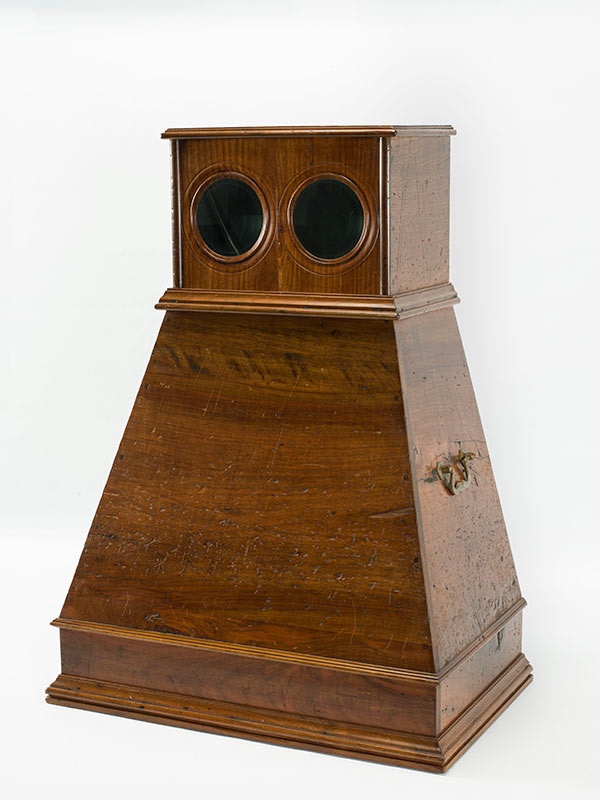
Device: Optical box (Peepshow)
Period: Late 18th century
Collection: Palácio Nacional da Ajuda
About: This optical box is a prime example of an early immersive visual culture. Featuring a wooden structure, the device is equipped with two circular double-convex lenses, specifically designed to enhance the perspective and depth of images viewed inside.
Crucial to its operation was a tilted mirror, which would be positioned at a strategic angle – typically 45º above the lens. The observer would look through the lens into the mirror to see the image on the device’s base.
These optical boxes were conceived for the observation of optical views – especially hand-coloured prints that created a three-dimensional illusion when seen through the lenses. Palácio Nacional da Ajuda also holds an extensive collection of 18th-century English optical views originally intended for this type of apparatus.
The historical significance of this piece is further highlighted by its documentation during the transition to the Portuguese Republic. In 1912, during the extensive judicial inventory of Palácio Nacional da Ajuda, the device was formally recorded and described as “serving for a parlour cosmorama”. This classification is particularly revealing, as it demonstrates that this type of optical devices were not exclusively found in popular fairgrounds or public exhibitions. Instead, they also held a prestigious place within palatial environments, serving as sophisticated domestic entertainment for the royalty and the upper classes.
At the time of this census, records already noted that some of its components were detached. This detail is relevant, as it suggests that the device had likely been out of use for a considerable period, transitioning from a functional object of entertainment to a stored historical item.
This piece holds additional significance as one of the few surviving objects from the palace’s former Cabinet of Physics (Gabinete de Física). It was an integral part of the instruction and education of princes D. João and D. Pedro, serving as a specialised tool for their academic upbringing. The presence of such an instrument reflects the growing importance of experimental physics in Portugal during this period, highlighting the Palácio da Ajuda’s role as a space for intellectual development where sophisticated devices were used to broaden the Royal Family’s knowledge and understanding of the world.
This optical box will soon undergo a restoration process to preserve its material integrity and further the study of historical optical instruments in Portugal. Before that it will be publicly presented on the museum international day (May 18) at the Palácio Nacional da Ajuda. The video below illustrates its functionality and use context.
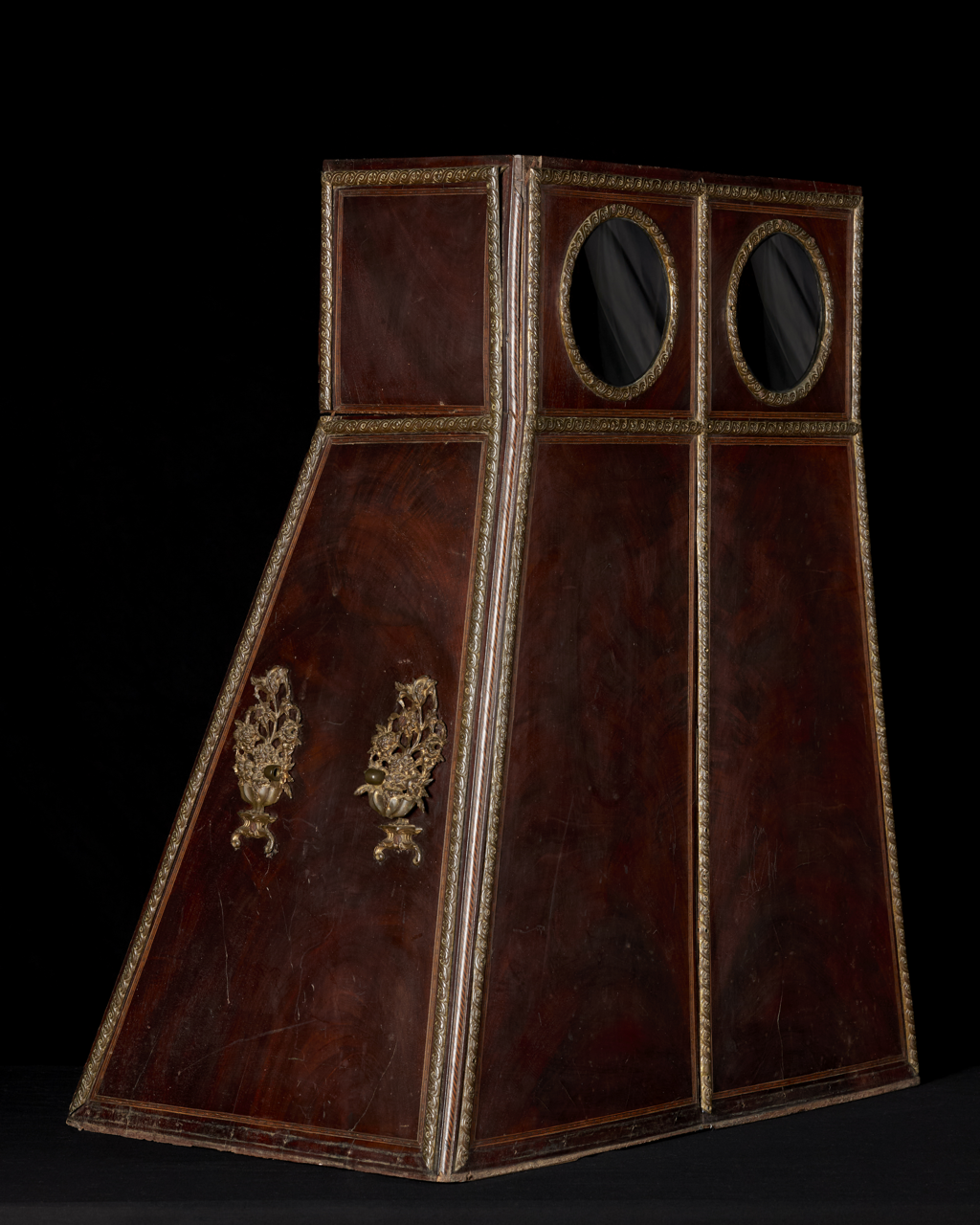
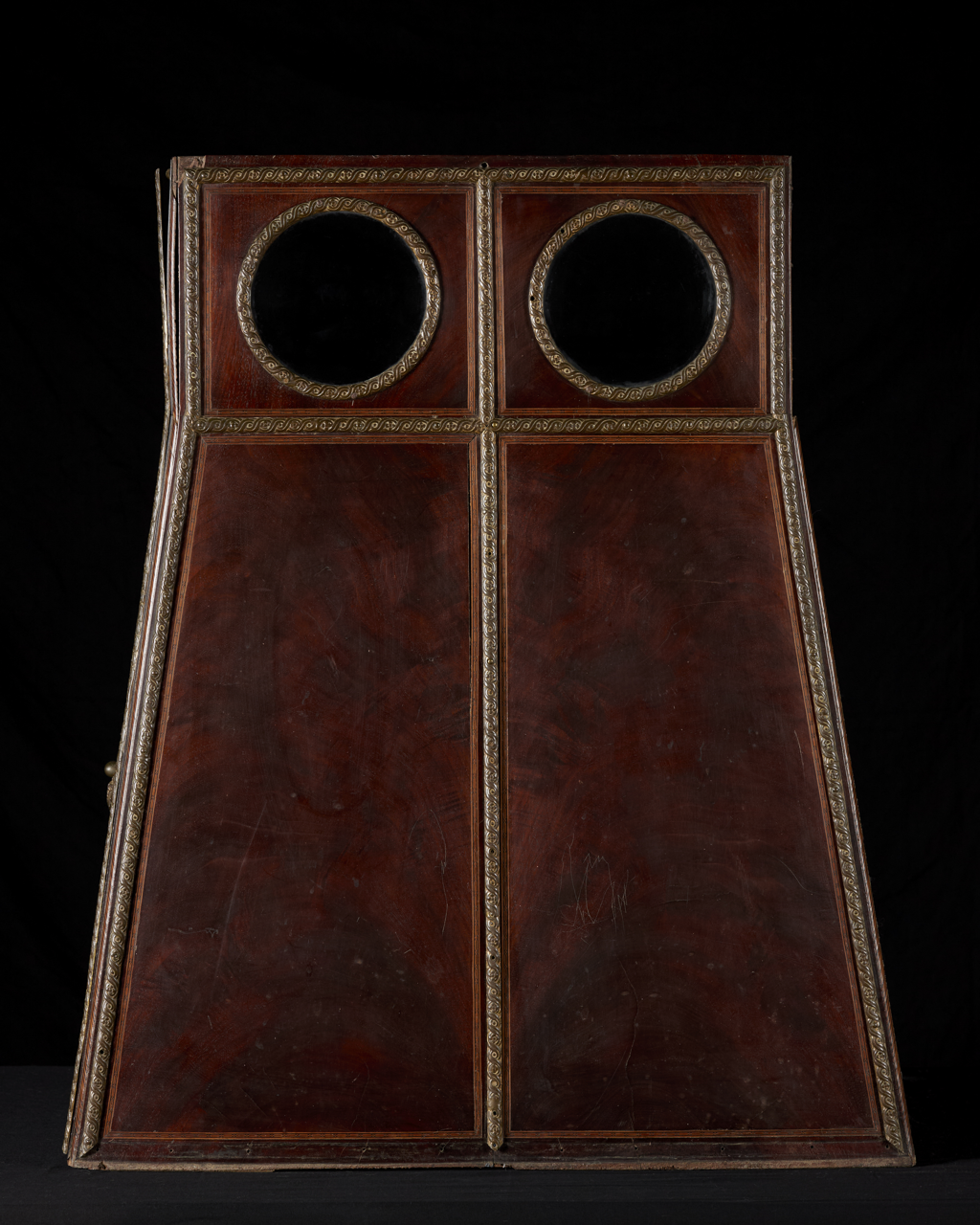
Optical box – front view
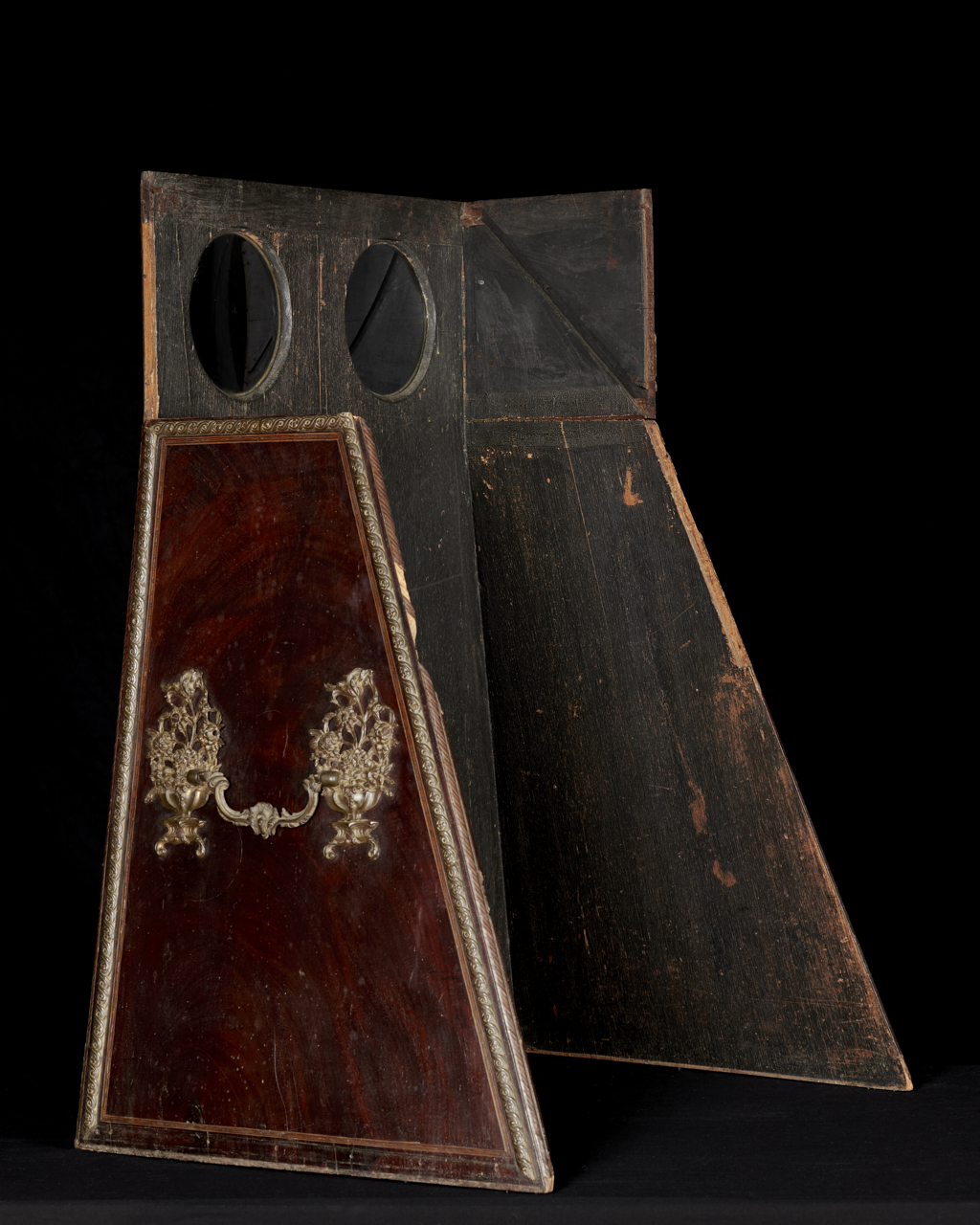
Optical box – 45º back view
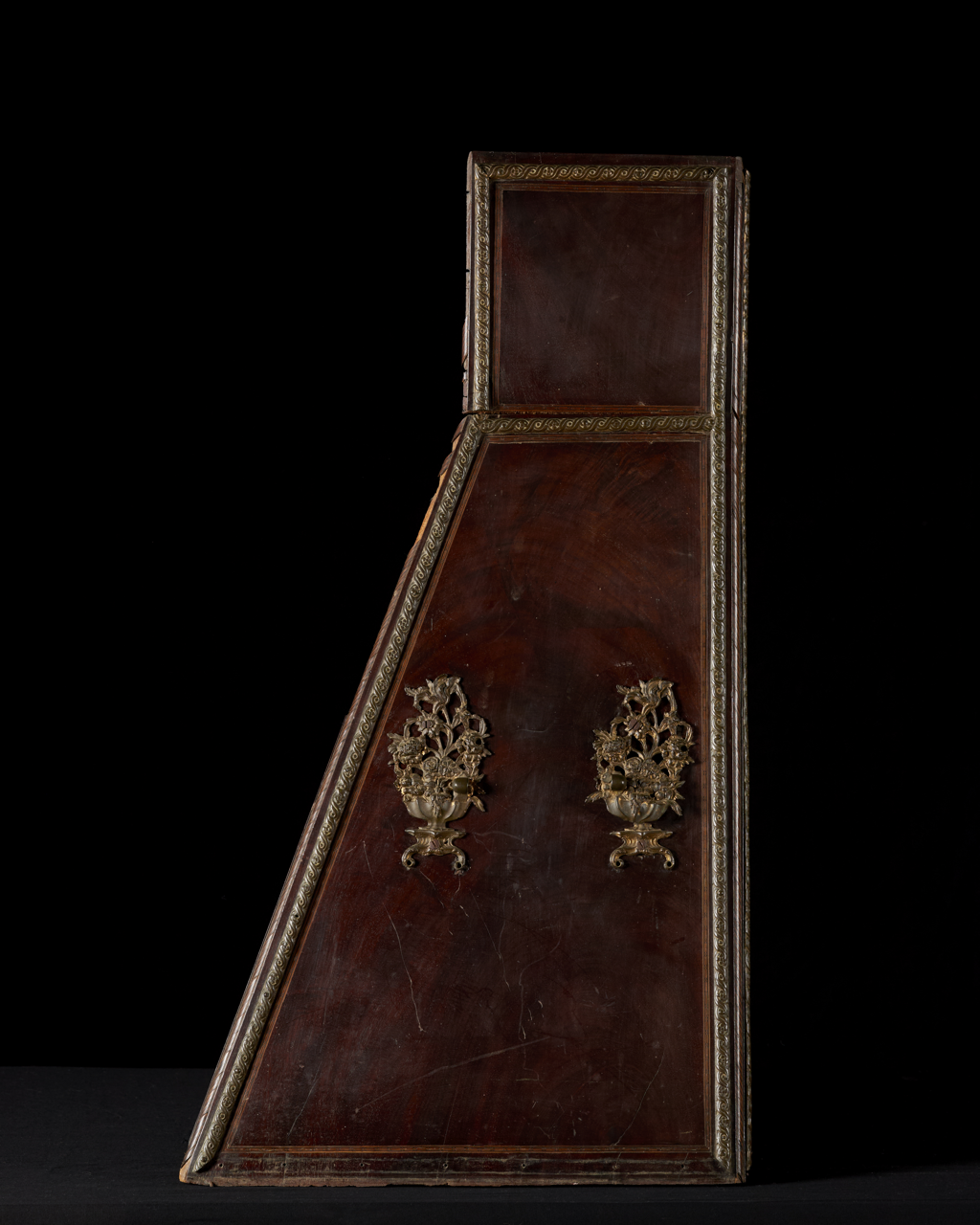
Optical box – side view
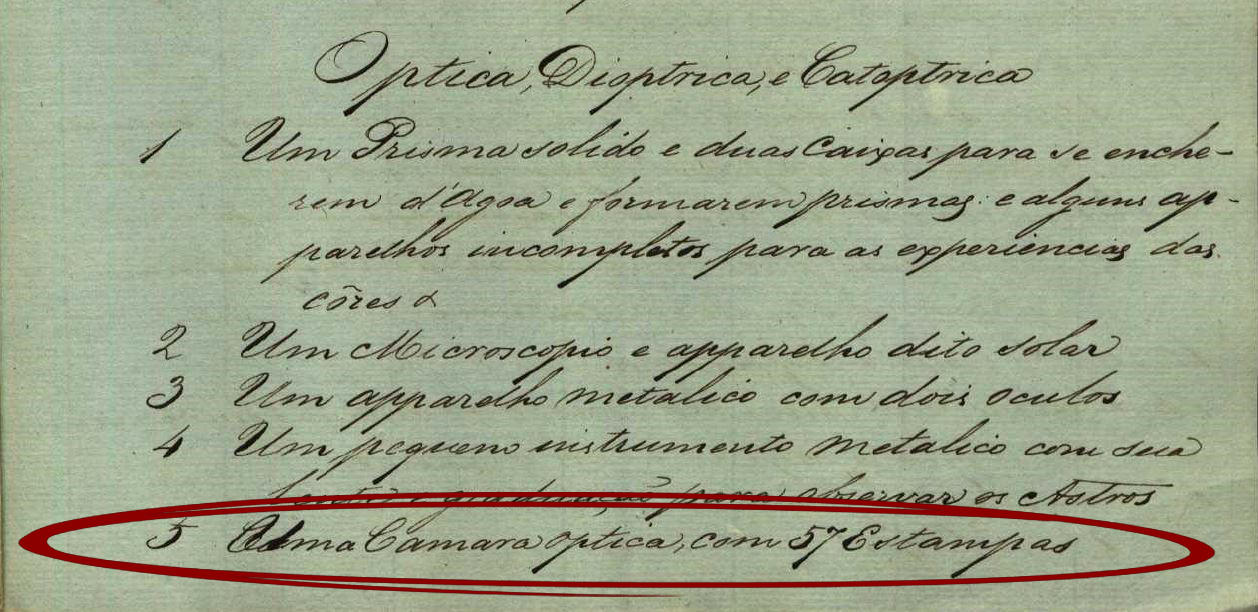
Palácio da Ajuda’s Cabinet of Physics: Inventory
Detail of Section on Optics, Dioptrics, and Catoptrics
The highlighted entry (no. 5) lists “An optical chamber with 57 prints”
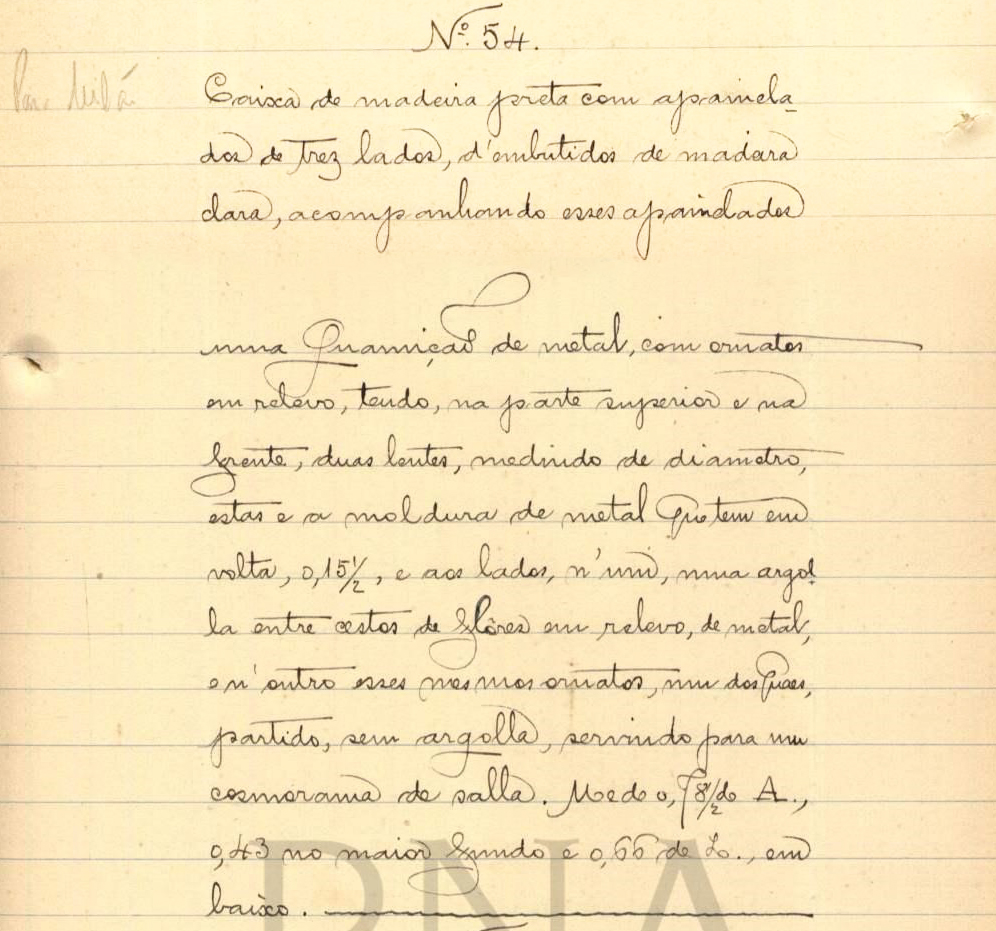
PNA Inventory (Detail)
No. 54.
Black wooden box with paneling on three sides, inlaid with light-colored wood decorating those panels.
A metal fitting with raised ornaments, having, on the upper part and on the front, two lenses measuring 0.15½ in diameter including the metal frame surrounding them, and on the sides: on one, a ring between raised metal baskets of flowers, and on the other the same ornaments, one of which is broken and missing the ring. Intended for a parlor cosmorama. (…)
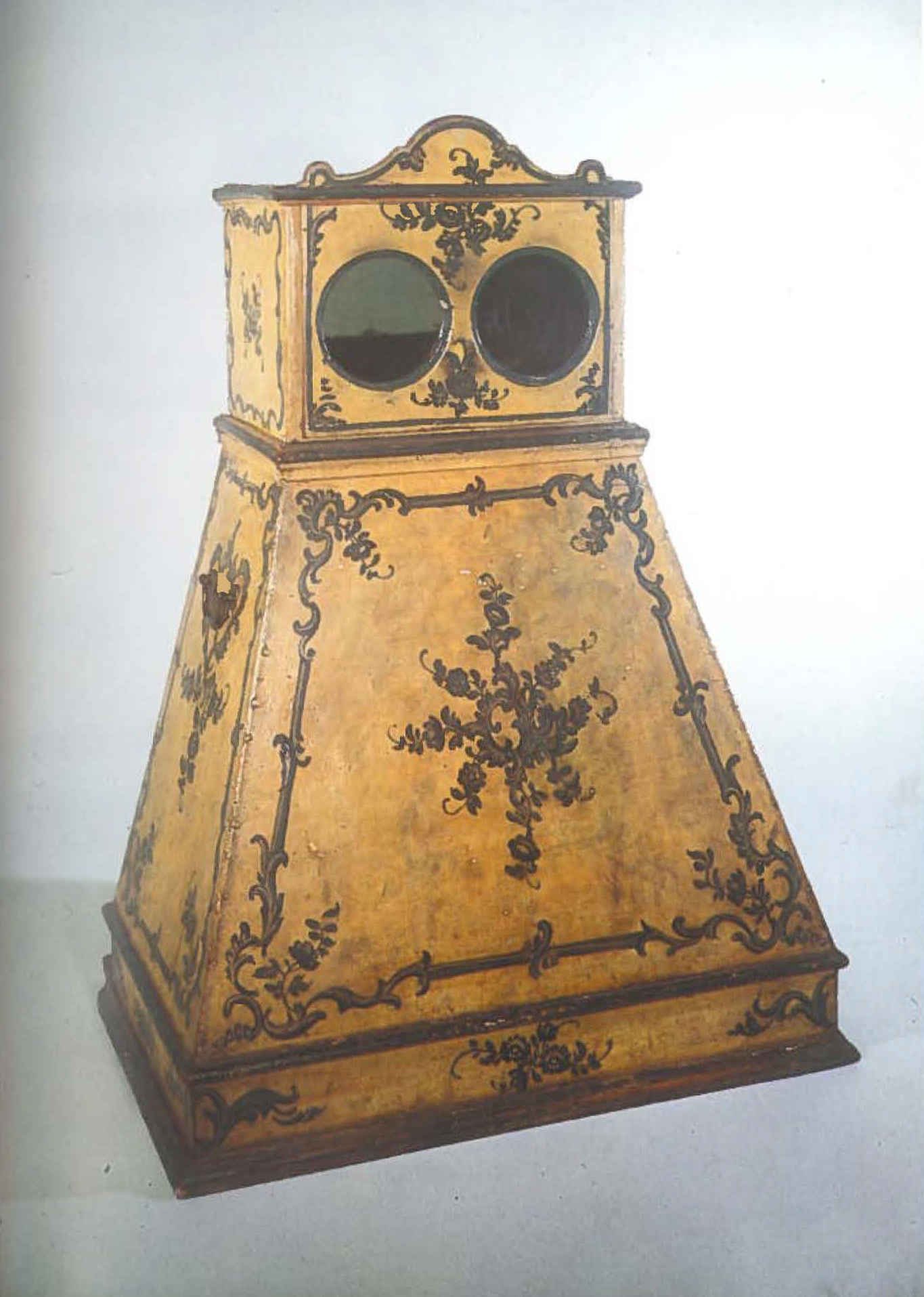
Optical Box, second half of the 18th century, Turin, National Museum of Cinema Collection