MA Students Explore Media Archaeology at Early Visual Media Lab
In March, the Early Visual Media Lab (EVML) hosted two separate visits for first-year students from Lusófona’s MA in Photography. These sessions provided an immersive introduction to the lab’s ongoing research projects and its specialised collection dedicated to the History of Photography.
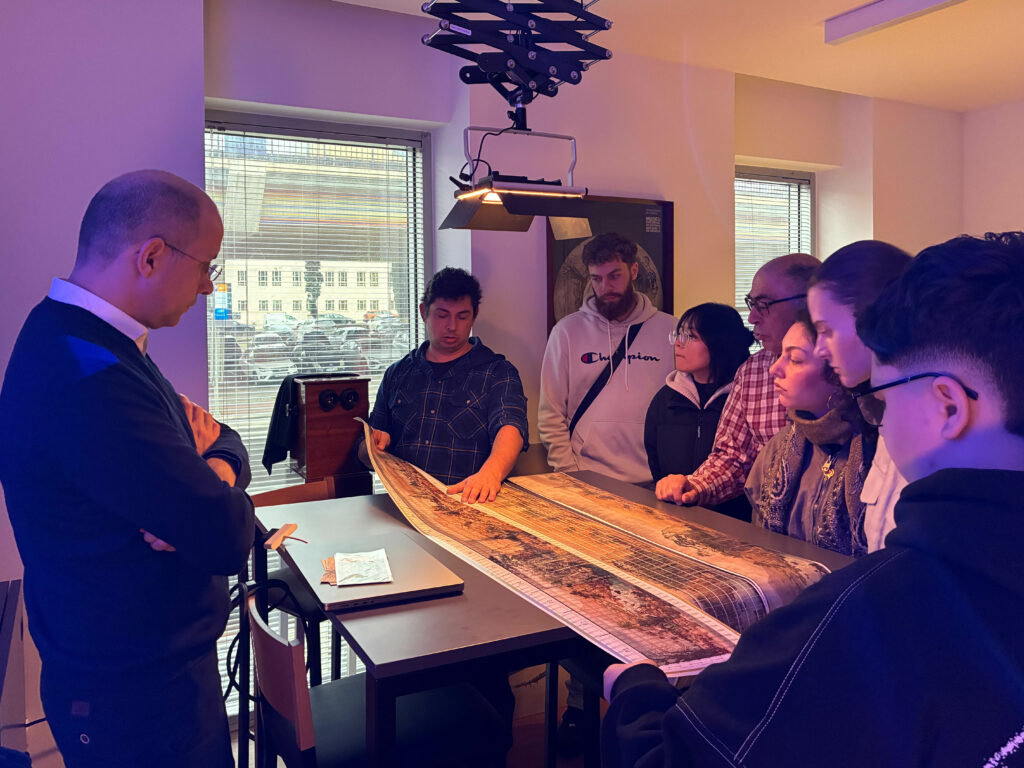
The first visit, led by Professor Rodrigo Peixoto, offered students the opportunity to experience two distinct Virtual Reality (VR) projects:
- The Congo Panorama: Students explored both the historical context of the panorama and an artistic reinterpretation featuring contributions from the Belgian-Congolese diaspora.
- The Recreation of Carlos Relvas’ First Photographic Studio: Beyond the historical reconstruction, this experience allowed students to view Relvas’ stereoscopic photographs through VR headsets, effectively replicating the original 3D effect.
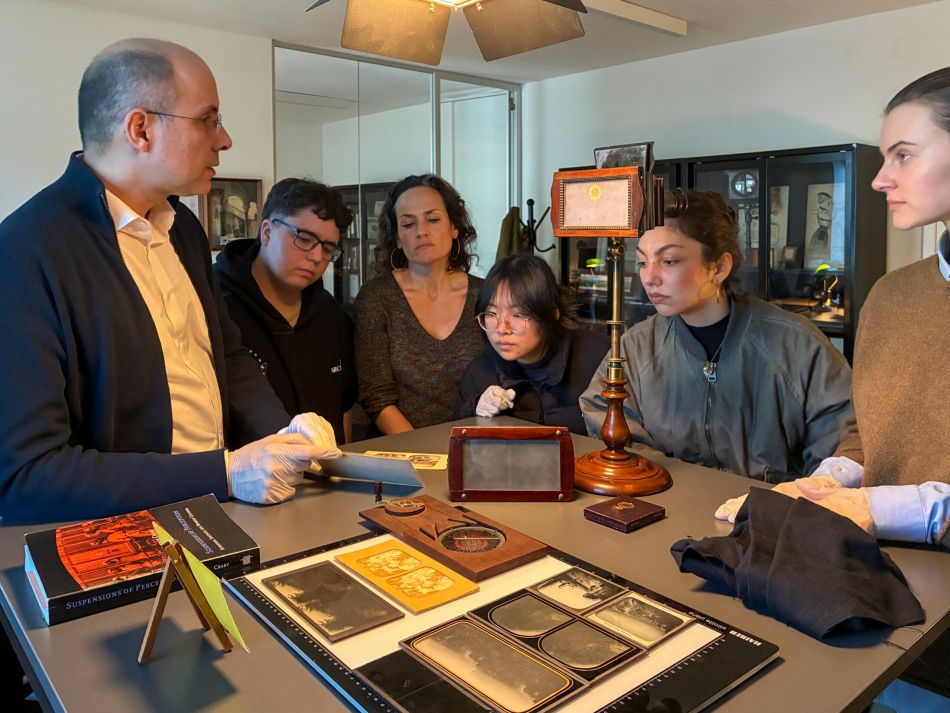
The second visit was led by Professor Victor Flores and Catarina Patrício and focused on the lab’s collection. While the primary emphasis was on the History of Photography, students also explored other early visual media.
Participants had the rare opportunity to handle daguerreotypes, stereoviews, and diverse 19th-century optical viewers. The session covered pivotal moments in visual history, including early experiments with colour and the study of motion through devices such as the phenakistoscope — a crucial precursor to cinema.
By opening its doors to MA students, the Early Visual Media Lab aims not only to showcase its current projects but also to inspire future research. As these students transition into their second year and begin their dissertations, the lab encourages them to consider Media Archaeology and related interdisciplinary approaches as a foundation for their academic work.