Stereoscopic Viewers
Casa-Estúdio Carlos Relvas
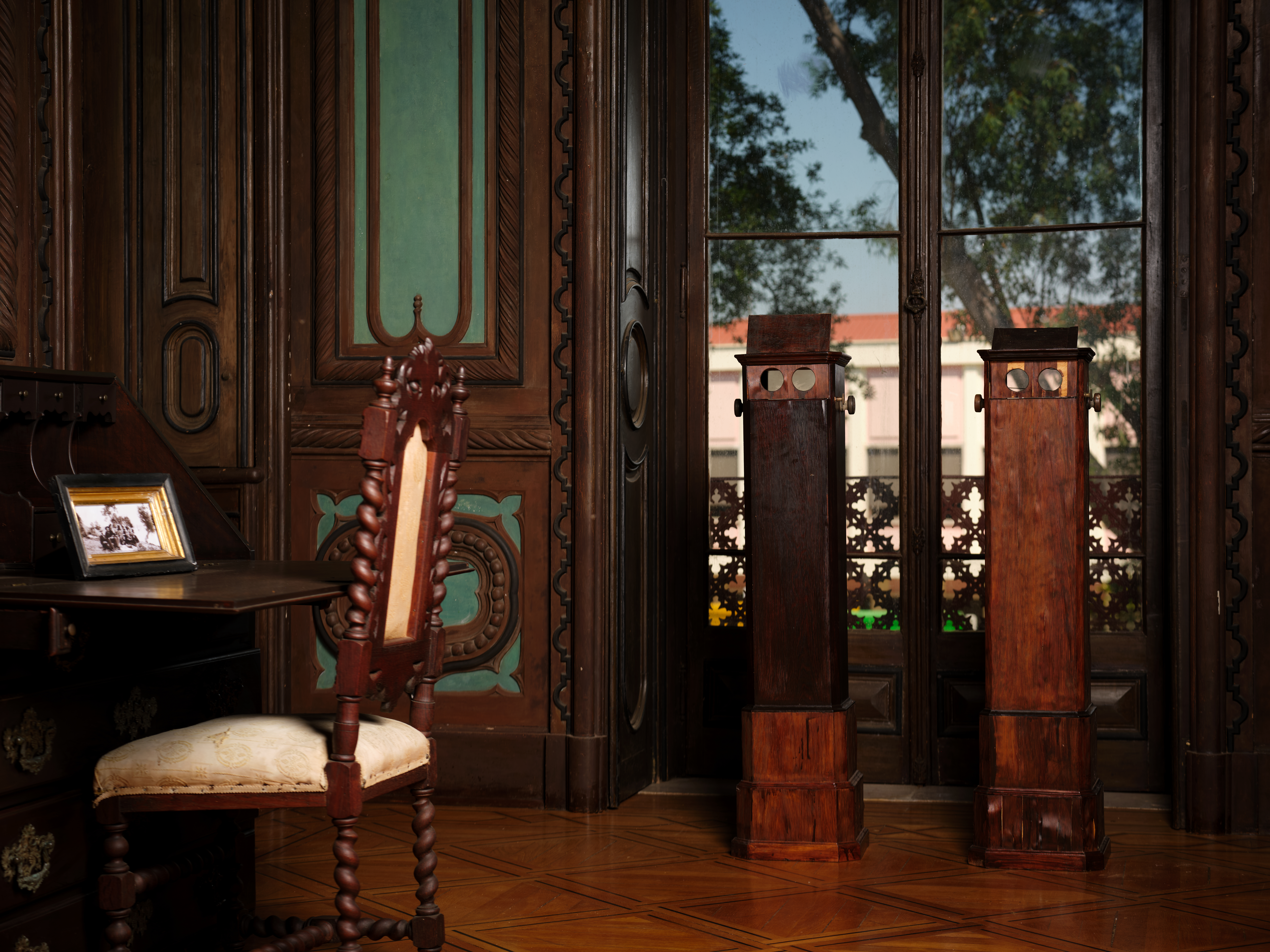
Device: Stereoscopic Viewers
Period: 1860’s/1870’s
Collection: Casa-Estúdio Carlos Relvas
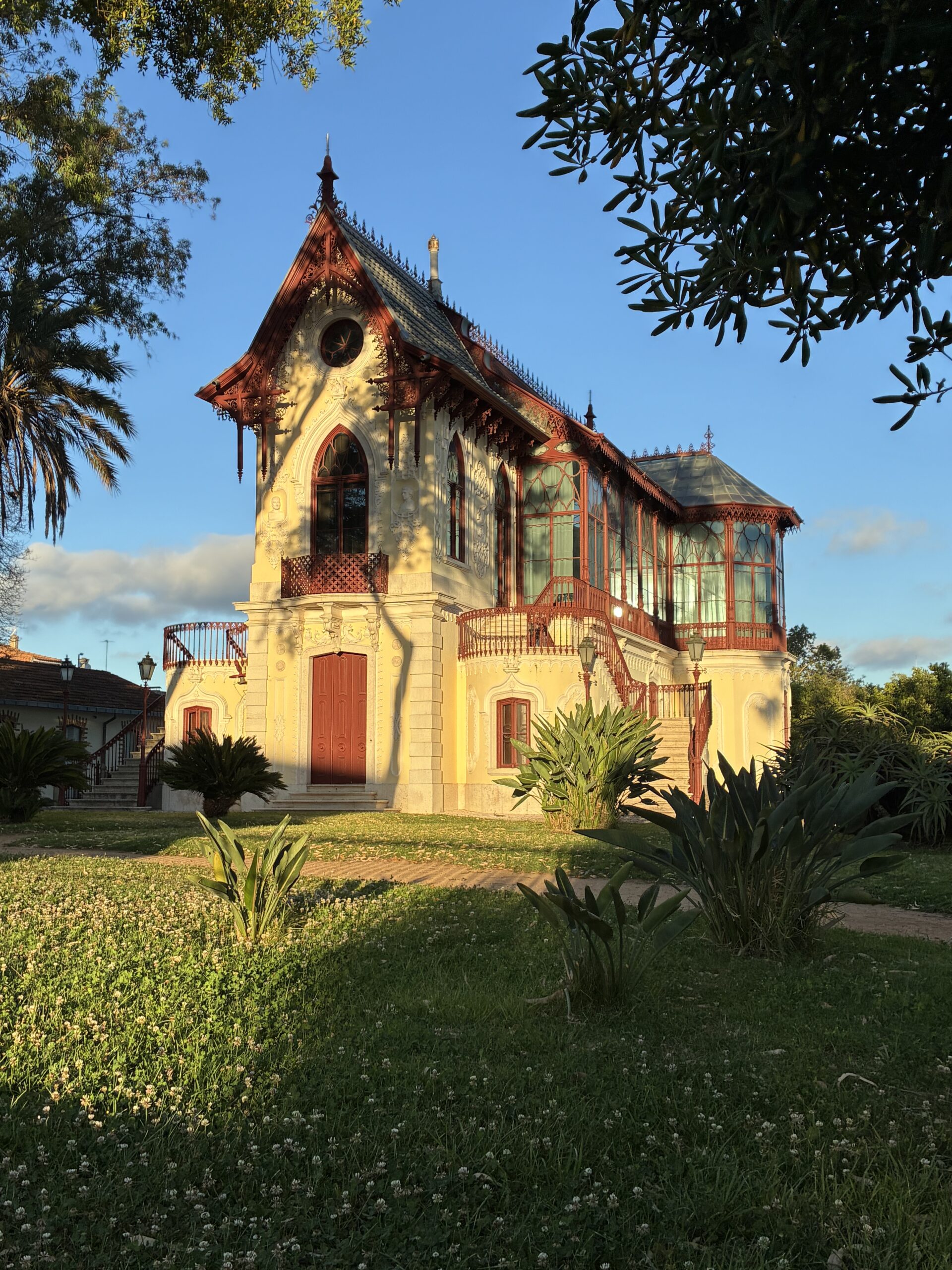
About: These two devices are Beckers French-type floor stereoscopic viewers, acquired sometime between 1862 and 1873 by Carlos Relvas. They form part of the collection of the Casa-Estúdio Carlos Relvas, a purpose-built photographic studio in Golegã, Portugal, designed and constructed between 1871 and 1875. The stereoscopes were located in the studio’s waiting room, while other optical devices — including a megalethoscope, a stereoscopic graphoscope, and a magic lantern— were displayed in the main gallery. Considered lost for several decades, these two floor stereoscopes were only recently rediscovered. Although they survive in poor condition with missing lenses and plateholders, and damage to their wooden structures, they retain a distinctive presence as key protagonists within Relvas’ studio.
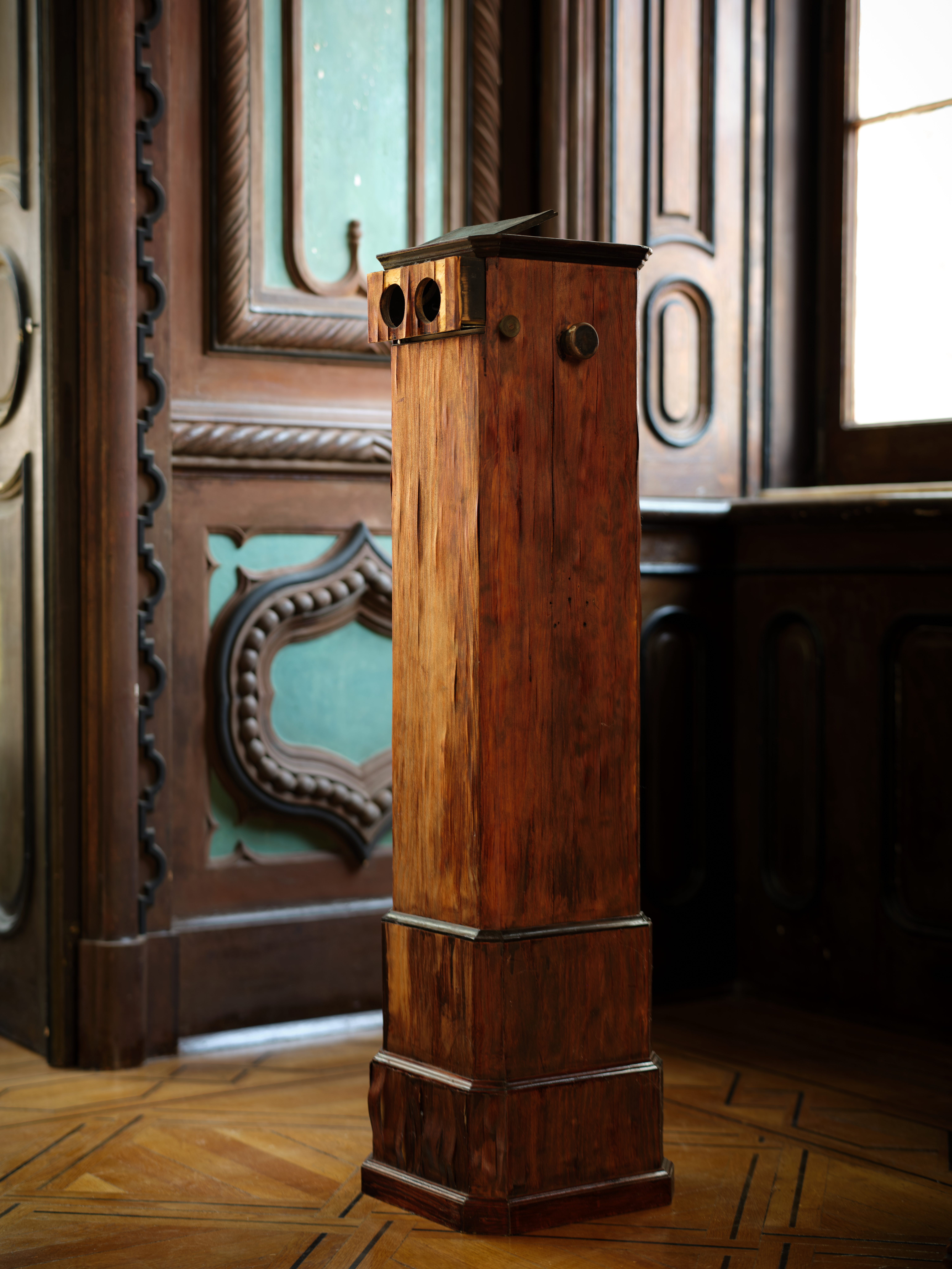
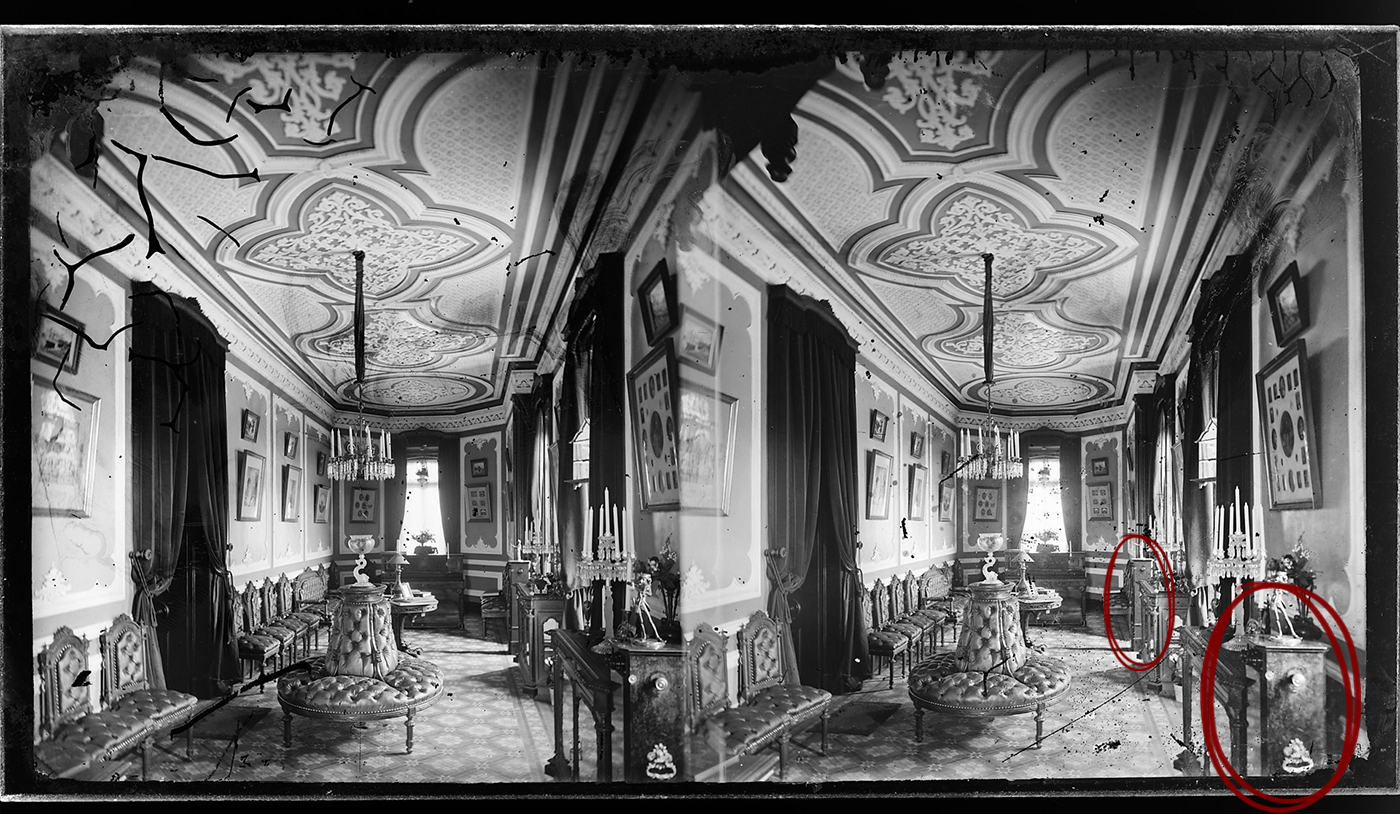
Until now, the only evidence of their existence was a wet collodion stereoscopic negative depicting the studio’s waiting room. In 2021, Victor Flores described this image as follows:
“Looking carefully at the stereo view of the luxurious waiting room of Relvas’s House-Studio, inaugurated in 1875, we notice the presence, among the sideboards on the right, of two magnificent floor stereoscopes, part of the entertainment offered to visitors while they waited to be photographed even if Relvas was no longer making stereographs by that time. These elegant viewers played a double role in the waiting room – they offered a comfortable and prolonged stereoscopic experience to the studio visitors, and they preserved images that were slowly becoming part of the past. At the time, these viewers were also known as ‘archivers’ or ‘cabinets’ as they served to store up to two hundred views, viewed in set combinations and sequences.It is not possible to know what these ‘visual machines’, now missing, showed at the time. They did, however, fulfil a function that became crucial to modern visual culture and to its industrial image production, one that today is realised by digital archives that assemble photographs by metadata, allowing a new understanding and access to non-digital born collections.” (pages 240-241)
A stereoscopic photograph by Carlos Relvas of the waiting room in his Casa-Estúdio, where the stereoscopic viewers can be seen on the right-hand side (1874–1875).